
5 things to discover about the beautiful Bluebells
Updated: Jun 11
Finches Lane Wild flower Florilegium of Britain and Ireland

Hyacinthoides non-scripta
The stunning bells of spring in our woodlands astonish country side walkers and flower seekers every year. This modest and delicate plant flourishes despite numerous difficult conditions.
It's also known as English harebell, wild hyacinth, cuckoo’s boots, lady’s nightcap, and fairy flower.
5 things you might not know about the wild flower - the Bluebell
Bluebells have 6 tepals*, that make the bell shape and curl back at the ends. Its pollen is cream coloured not blue or green like other varieties.
(*a petal that has no protective sepal)
Bluebells are perennial herbaceous plant that spends most of the year hiding beneath the ground. The time to see them is in the spring month of April.
The deep violet bluebell tepals* give a gentle sweet aroma, a little like the hyacinth flowers you see in the garden.
It blooms on only one side of the stem, and the top droops or bends over, giving it the distinctive bowing look.
50% of all the world's bluebells are growing in UK and Ireland woodlands, but they also can be seen in Western Europe and in the USA in the Pacific Northwest and Mid-Atlantic Regions. New Zealand has a growing population too.
Traditionally, it served as an adhesive or starch for books and clothing. It is toxic and should not be consumed by humans or animals. It is advisable to wear gloves when handling it.

Even more information:
This Bluebell should not be confused with the Spanish Bluebell, which is native to Spain, Portugal, and Northwest Africa.
This Spanish Variety stands more upright and has a lighter blue hue, growing on both sides of the stem, occasionally appearing in pink or off-white. (Take a look at the photo below)
The leaves are thicker, and the flower is more open with little to no fragrance.
Both plants are beautiful and bloom around the same time, but it's crucial to keep them apart to prevent crossbreeding, which poses a threat to the English variety.

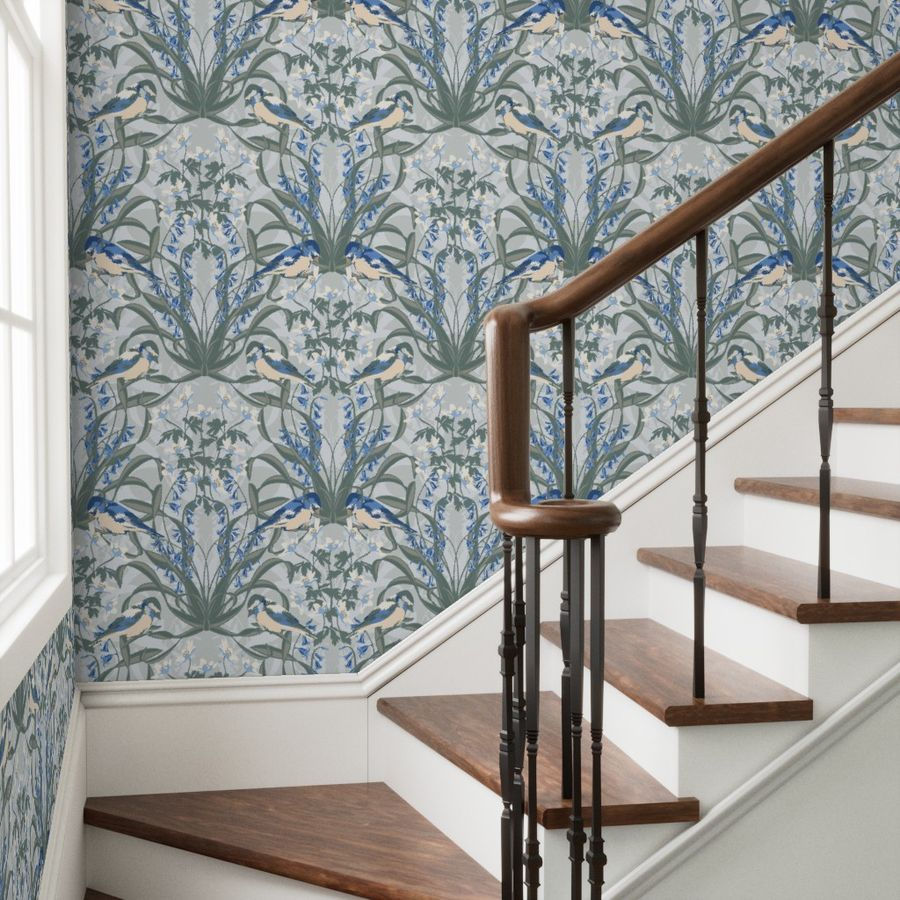
If you love Bluebells like I do, check out the Bluebell Collection at our shops, at the moment we have wallpaper, fabrics and home wares..


If you are interested learn more about Tepals at Wikipedia - click the button below to take you there.


Comments